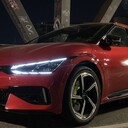
Du hast also im stehen geheizt und bist dann Brötchen holen gefahren? Du schaffst nur schwer über 50kWh/100km durch fahren beim EV6.
Beiträge von koaschten
-
-
Hier steht es anders koaschten
Energie Preis plus Grundgebühr von grüüün.
ok. das ist mir nicht deutlich geworden. muss ich wohl noch mal nach lesen.
-
Schon ein interessantes Auto, aber ohne offizielles Händlernetz mit langer Garantie keine Option für mich.
ohne Lokalisierung? als Dritt-Import über Dubai? no ... go...
-
Sieh dir den Link an und mach dir selbst deinen Reim draus.
Hab ich, die garantieren dir die Grundgebühr, nicht den kWh Preis. Also völlig nutzlos.
ZitatWir geben Dir eine 10-jährige Garantie auf unseren Grundpreis.
Zurück zum Problem von Daxbauer , warum wurde nicht VOR Vertragsabschluss unter https://www.eon.de/de/pk/e-mob…aden-und-profitieren.html in die Liste der unterstützten Fahrzeuge geguckt? Da steht nämlich ganz offensichtlich Kia nicht drin. Und ein Umweg über unterstütze Wallboxen gibt es auch nicht. Sorry, nicht genau genug hingeguckt.
-
ich zahl 23,2 cent und das für 10 Jahre Garantiert strompreis,
Nicht die anderen Sachen wie Steuer usw.
10 Jahre Preis Garantie? Welcher Anbieter ist denn so mutig?
-
Frage: Wofür steht das „PE“
optional PE - Product Enhancement - Produkt Verbesserung ... aber ja, das ist wie Kia das Facelift definiert.
-
-
re offtopic: doch so war es, die 2 Blöcke wurden unabhängig voneinander verifiziert, wer auf die glorreiche idee gekommen ist... frag mich nicht.
re: Gameboy
Challenge kommt vom Auto
es gibt einen bekannten (schwachen) Algorithmus, den lässt der Gameboy auf die Challenge los und testet wann eine "valide" Response generiert wurde. und schickt die dann an das Auto
Auto auf.
-
-
Heißt ja nicht, dass nicht der Algorithmus mies implementiert sein kann...
Weil ich zu faul bin die ganzen Artikel und YT Videos noch mal zusammen zu suchen:
Die kurze Version ist, schwache schlecht implementiere Kryptographie.
ZitatAlles anzeigenHere’s how the emulator mimics the key fob in the vulnerable handshake:
***
### **Step-by-Step Process**
1. **Car sends a challenge**
The car broadcasts a cryptographic challenge (a random number or token) expecting the key fob to respond with a valid encrypted reply.
2. **Emulator intercepts the challenge**
The Gameboy-like device listens on the same RF frequency as the key fob and captures the challenge.
3. **Computes the response using weak algorithm**
* Kia/Hyundai systems often use outdated algorithms like **fixed keys or predictable rolling codes**.
* The emulator has the algorithm and secret key preloaded, so it can compute the correct response almost instantly.
4. **Emulator sends the valid response back to the car**
The car verifies the response and assumes the real key fob is present.
5. **Car unlocks and starts**
No secondary authentication (like PIN or UWB proximity), so the car grants full access.
***
### **Why this works**
* The emulator essentially **emulates the cryptographic function of the key fob** because the algorithm is not secure.
* Modern systems use AES or UWB-based proximity checks, but these older systems rely on weak symmetric keys that can be replicated.
***
The “Gameboy Attack” works on Kia (and Hyundai) cars because of a **flaw in their keyless entry and start systems**. Here’s the breakdown of what’s exploited:
### **1. What is the attack?**
Thieves use a device disguised as a Nintendo Game Boy, but inside it’s a **key emulator**. This tool can **mimic the car’s original key fob** and trick the vehicle into thinking an authorized key is present. Once that happens, the car unlocks and starts as if the real key were there.
***
### **2. The underlying vulnerability**
* **Weak cryptographic challenge-response system**:
Kia and Hyundai vehicles use a radio-frequency protocol for keyless entry. When you touch the door handle, the car sends a challenge to the key fob, which responds with a code. The Gameboy device intercepts this and uses brute-force or precomputed algorithms to generate the correct response extremely quickly.
* **Insufficient encryption and predictable algorithms**:
The security algorithm used in these systems is not robust enough against modern computing power. What was “secure enough” years ago is now trivial to crack with specialized hardware.
* **No secondary authentication**:
Many affected models lack additional layers like PIN-to-drive or ultra-wideband (UWB) proximity checks. Once the emulator passes the handshake, the car assumes full trust.
***
### **3. Why does it work so fast?**
The Gameboy emulator:
* Initiates communication when the thief touches the door handle (wakes the car).
* Bombards the system with codes or uses a database of known keys for that brand.
* Finds the correct cryptographic response in seconds, effectively cloning the key.
This is much faster than older relay attacks because it doesn’t need the real key nearby. [\[techstory.in\]](https://techstory.in/kia-hyund…s-with-a-game-boy-device/), [\[autoevolution.com\]](https://www.autoevolution.com/…le-it-created-255765.html), [\[motorbiscuit.com\]](https://www.motorbiscuit.com/game-boy-method-steal-cars/)
***
### **4. Why Kia and Hyundai specifically?**
* Historically, these brands **skimped on immobilizers and advanced encryption** to cut costs, especially in North America.
* Their keyless systems rely on older algorithms that are now vulnerable to brute-force attacks.
* Updates to emulator databases have made Korean cars prime targets. [\[autoevolution.com\]](https://www.autoevolution.com/…le-it-created-255765.html)
***
### **5. Mitigation**
* **Software updates**: Strengthen encryption and add rolling codes.
* **Hardware upgrades**: Replace vulnerable keyless modules.
* **Owner actions**: Use steering wheel locks, disable keyless entry if possible, and park in secure areas. [\[techstory.in\]](https://techstory.in/kia-hyund…s-with-a-game-boy-device/)
***
offtopic:
Ich entsinne mich da zum Beispiel an WLAN Router, die den WPA Passphrase (mindestens 8 Zeichen) in 2x 4 Zeichen unterteilt hatten und diese Blöcke unabhängig verifiziert haben. Vereinfacht wenn man nur Ziffern nutzen würde statt 1x 100.000.000 Kombinationen 2x 10.000 Kombinationen also in Summe 20.000 Versuche und um Faktor 5000 schneller zu knacken. Beispiel ... 5 Sekunden statt 25.000 Sekunden (~7h)